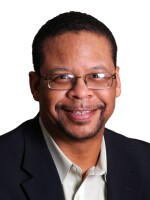
Josephine County commissioner candidates Chad Hansen and Mark Jones disagree over a proposed public safety levy and how much housing development the county should allow in rural areas.
The candidates for the two-year unexpired Position 2 term discussed those issues, along with the county’s strained finances, government instability and homelessness, during a forum on The Jefferson Exchange ahead of the Nov. 3 general election.
Hansen said the county must live within its means and opposed the wording of the proposed 93-cent-per-$1,000 property tax levy for the jail and juvenile justice. Jones supports the measure and said the county should seek additional sources of revenue.
The two advanced from an eight-candidate field in the May primary.
Hansen is a longtime Josephine County contractor who has worked in logging, mining, public works and residential development. He also leads a nonprofit focused on workforce housing.
Jones grew up in the Murphy area and spent nearly three decades in the fire service before retiring in 2018. He chairs the county’s Rural Planning Commission and serves as vice chair of its Housing and Community Development Council.
Restoring stability in county government
Josephine County government has faced years of upheaval, including commissioner recalls, resignations, ethics complaints and lawsuits filed by employees.
Hansen said commissioners should work collaboratively with county department heads and develop a culture focused on solving problems.
“As a county commissioner, you’re the CEO of basically 22 small businesses,” Hansen said, referring to the county departments and budgets the board oversees.
Jones said his emergency response experience taught him to gather information and listen to different perspectives before making decisions.
“I look for the facts,” Jones said. “I make sure that every voice is being heard before a decision is made.”
Jones said his campaign is based on putting problem-solving ahead of political labels.
County finances and the public safety levy
Josephine County has long struggled to pay for services as federal timber revenue has declined.
Jones said the county’s general fund totals about $20 million and supports departments including the assessor, clerk, surveyor, court facilities and emergency management. He said county leaders need to pursue new sources of revenue.
Hansen said commissioners must establish priorities and accept that the county cannot afford every service residents might want.
“We will fund our priorities, and some things just don’t get done,” Hansen said.
The candidates also split over the proposed five-year renewal of a levy supporting the county jail and juvenile justice services.
Hansen said he believes the county needs the revenue but wants the ballot language to specify how much would go to each service.
“I think we need the 93 cents, but I’m not going to vote for the current wording that is there because I don’t know where all the money is going,” Hansen said.
Jones supports the measure. He said the levy would continue funding the jail and juvenile justice, although the county might eventually need to seek additional money for juvenile services.
Jones also proposed developing a shared radio system for law enforcement, firefighters and other emergency responders. He said participating agencies could divide the system’s maintenance costs while improving coverage in areas with unreliable communications.
Rural development and property rights
The candidates offered sharply different approaches to rural development.
Jones said state land-use restrictions have limited housing and commercial development in communities such as Murphy, Wilderville and Wonder. He wants county leaders to seek changes in state law that would allow some of those communities to grow.
Hansen defended the county’s five-acre minimum in some rural residential zoning. He said increasing density in areas without municipal water and sewer systems could lead to failing septic systems and contaminated wells.
“I think we leave rural rural, urban urban,” Hansen said.
Hansen said rural land should generally remain available for farming and timber production rather than urban-style commercial development.
Housing and homelessness
Hansen said private developers, rather than county government, should provide housing. He said the county could encourage construction by removing regulations that make it harder for property owners to develop their land.
“I don’t think it’s the county’s job to provide housing,” Hansen said.
Jones said commissioners should support community-led projects that help people move into stable housing. He pointed to Mission View Village, a Grants Pass development planned for older adults with low incomes, as one example.
“The commissioner should just support responsible solutions,” Jones said.
Guests
- Chad Hansen, candidate, Josephine County Board Commissioner, Position 2
- Mark Jones, candidate, Josephine County Board Commissioner, Position 2