

-
 Kyra Buckley/OPBPart of the money will go to upgrade the rail line for a potential future increase in shipping containers.
 -
 Theo Greenly/JPREleven rural hospitals in Oregon are teaming up in a new state-approved network, which they hope will give them a boost at a time when many are struggling.


-
 For the past year, Oregon's unemployment rate has fluctuated very little as the state — and the nation — has remained in what economists call a low-hire, low-fire environment.
 -
 JPR reporters discuss the top news stories they've worked on this week.
 -
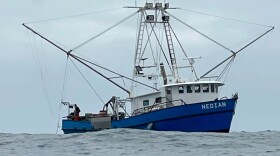 Sharp increases in the cost of fuel, triggered by the U.S. war with Iran, are reverberating through the global economy. In the Pacific Northwest, commercial fishermen are grappling with surging costs for the diesel fuel that powers their boats along the West Coast fishing grounds.
 -
 JPR reporters discuss Southern Oregon University’s recovery planning, Oregon’s first floating solar project, Bandon School District resignations and the start of fire season in Southern Oregon.
 -
 Appealing to voters’ anxieties about the soaring cost of living is central to Democrats’ messaging in their hopes of big wins in this year’s midterm elections. In Oregon, a question on the primary ballot is complicating that strategy.
 -
 Former Senate Minority Leader Tim Knopp’s comments came at a business conference in Oregon’s capital city on Monday
 -
 Should California pension funds invest in fossil fuels? How about Tesla and Palantir? Or companies with anti-union records? Those debates are playing out at CalPERS and CalSTRS.
 -
 A State Assembly oversight hearing on petroleum in California Tuesday painted an uncertain picture with projections the state has enough oil and gas for the next six weeks.
 -
 Oregon led the coalition of states arguing the president did not have the authority to levy widespread import taxes.
 -
 The U.S. Supreme Court ruled today that President Trump does not have the authority to impose broad tariffs under the emergency act he has cited. Tariffs have affected California ports, farms, businesses, workers and consumers.
 -
 Overall, job vacancies normally go up in the final three months of the year. But in 2025 there was an unusual drop from the summer.
 -
 Chelsea Rose, host of Underground History, looks at the impact of a railroad that once linked southern Oregon and northern California over the Siskiyou mountains.


